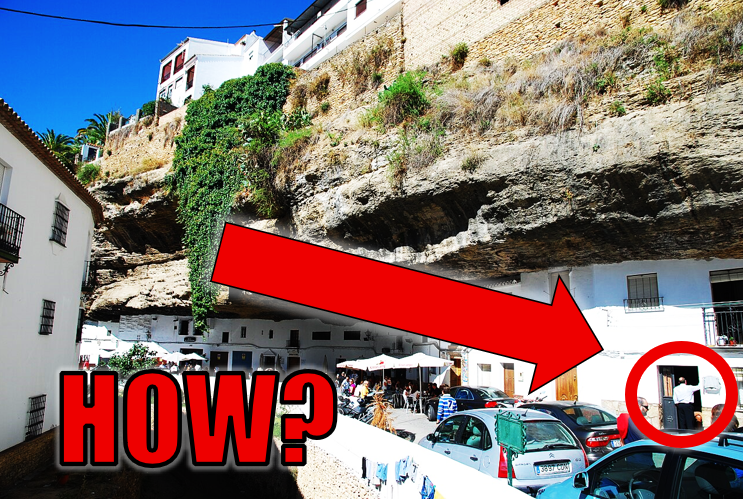
Where the town grew inside a river-cut gorge, building under the rock instead of clearing it.1
Some towns are built on hills. Some towns are built next to cliffs. Setenil de las Bodegas did something else entirely.
It moved in.
In this small town in southern Spain, massive slabs of rock hang directly over streets, houses, cafés, and bedrooms. The “roofs” aren’t tiles or wood or concrete. They’re the underside of a mountain. In some places, the cliff is so low you could reach up and touch it.
This isn’t a movie set. It’s not a theme park. It’s a real town that also happens to be wildly photogenic.
It’s a real town where about 2,600 people live their normal lives under under enormous rock overhangs.
And somehow, it works.
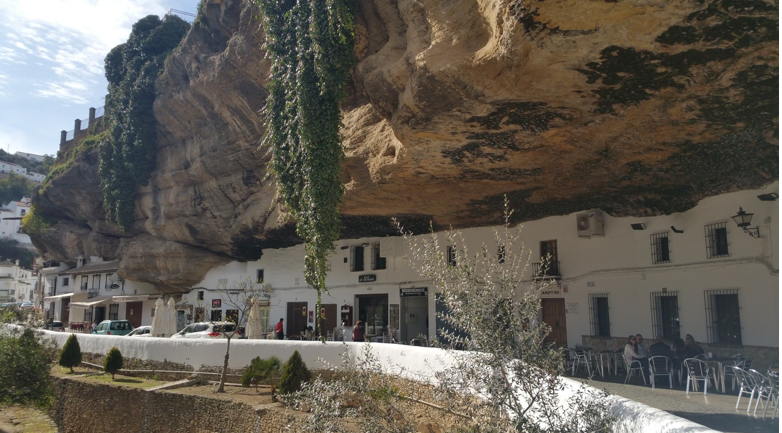
Yes, you’re seeing this right. A town under a rock.
At first glance, Setenil looks like an architectural accident. A place where a rockslide almost happened but froze in time. But the reality is far more interesting. This town wasn’t built around the rock. It was built with it.
And once you see it, you can’t unsee it.
Where is Setenil de las Bodegas?
Setenil de las Bodegas is located in Andalusia, in southern Spain, in the province of Cádiz. It sits inside a narrow river gorge carved by the Río Trejo (also called the Guadalporcún). Over thousands of years, water eroded the limestone cliffs into dramatic overhangs and caves.
Instead of leveling the rock and starting fresh, people did something much simpler.
They used what was already there.
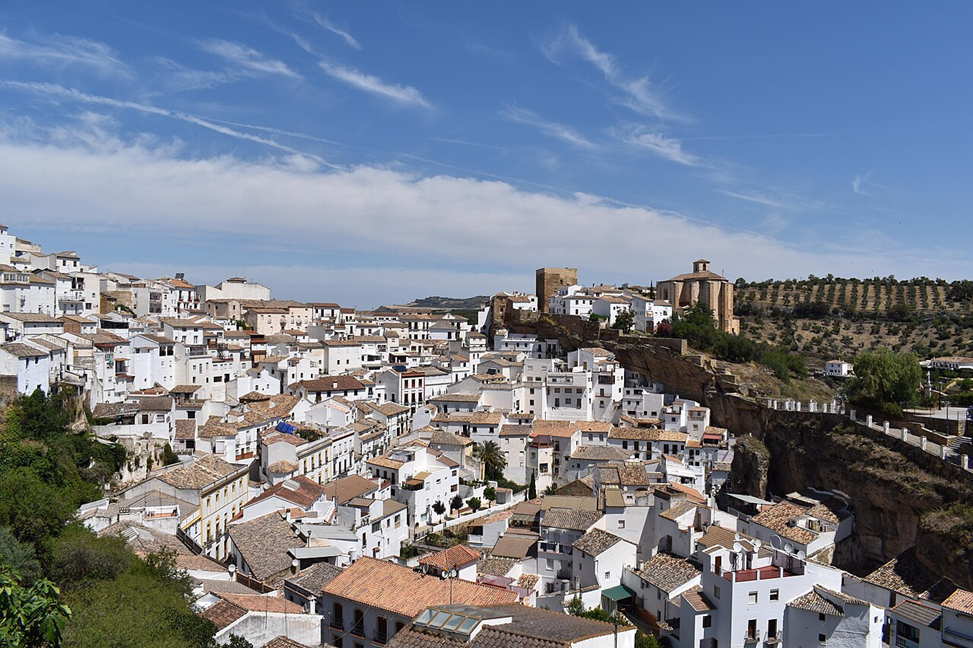
An outer view of Setenil de las Bodegas.2
The town wraps itself around the canyon. Streets follow the curves of the river. Houses slide into natural cavities. And in some places, the rock simply becomes the ceiling.
Are the houses really “inside” the mountain?
Sort of. And also… yes.
There are two main types of buildings in Setenil:
- Homes that use natural cavities in the gorge walls
- Homes that extend beneath huge overhangs, where the rock becomes roof/back wall
In both cases, the rock acts as a structural and thermal element. It provides insulation, stability, and protection. Some streets are completely exposed to the sky. Others feel like you’re walking through a tunnel that just happens to contain bars and souvenir shops.
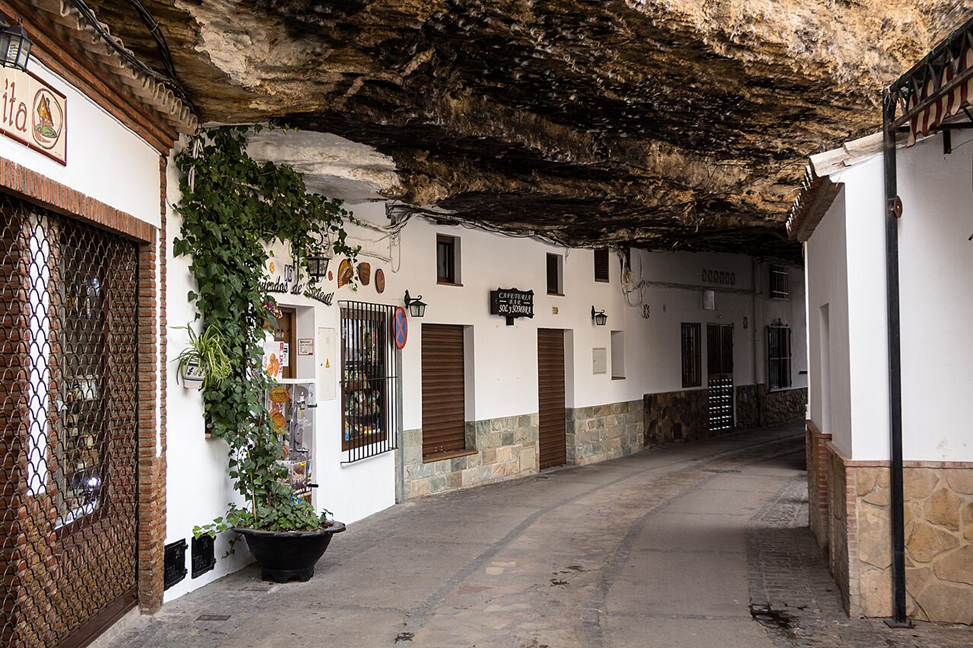
A charming street in Setenil de las Bodegas.3
Two streets make this famous:
- Calle Cuevas del Sol (“Caves of the Sun Street”)
- Calle Cuevas de la Sombra (“Caves of the Shade Street”)
One side gets light.
The other is permanently shadowed by rock.
Same town. Same climate. Two totally different atmospheres, separated by a few meters.
Why would anyone build like this?
Because it makes an absurd amount of sense.
First: temperature.
The limestone acts like natural air conditioning. Inside rock homes, temperatures stay relatively stable year-round, hovering around a comfortable range even when Andalusia bakes in summer or cools in winter.
Second: defense.
In medieval times, Setenil was a fortified settlement. The gorge-and-fortress setting had clear defensive advantages in medieval warfare. Invaders couldn’t easily approach, and the town blended into the landscape.
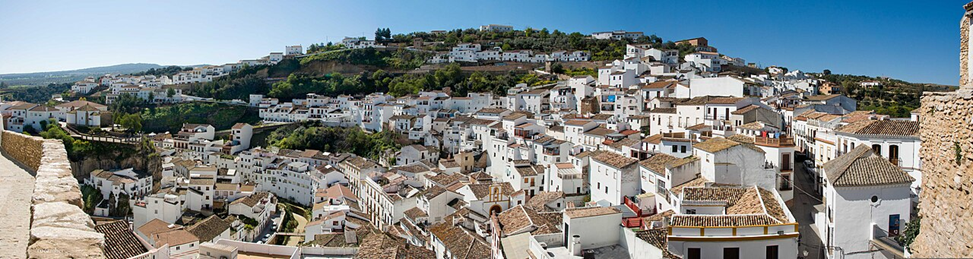
Panorama of Setenil de las Bodegas – a very defensible town in medieval times.4
Third: construction efficiency.
Why quarry stone and haul materials when the mountain is already doing half the work? The rock provided walls, ceilings, and insulation all at once.
Fourth: durability.
Limestone doesn’t rot. It doesn’t burn. It doesn’t need replacement every few decades.
This wasn’t “weird architecture.”
It was practical architecture.
It just happens to look insane.
How old is this place?
Very.
People have lived in the caves here since prehistoric times. The area was later settled by Romans, then became a major Moorish stronghold. The town remained under Muslim rule until 1484, when it was captured by Christian forces during the Reconquista.
Setenil’s name comes from Latin: Septem Nihil (“seven times nothing”), referencing how many attempts it took Christian armies to capture it.
“De las Bodegas” was added later, after wine cellars (bodegas) were built into the caves.
So when you walk these streets, you’re not just under a rock.
You’re under centuries of human adaptation.
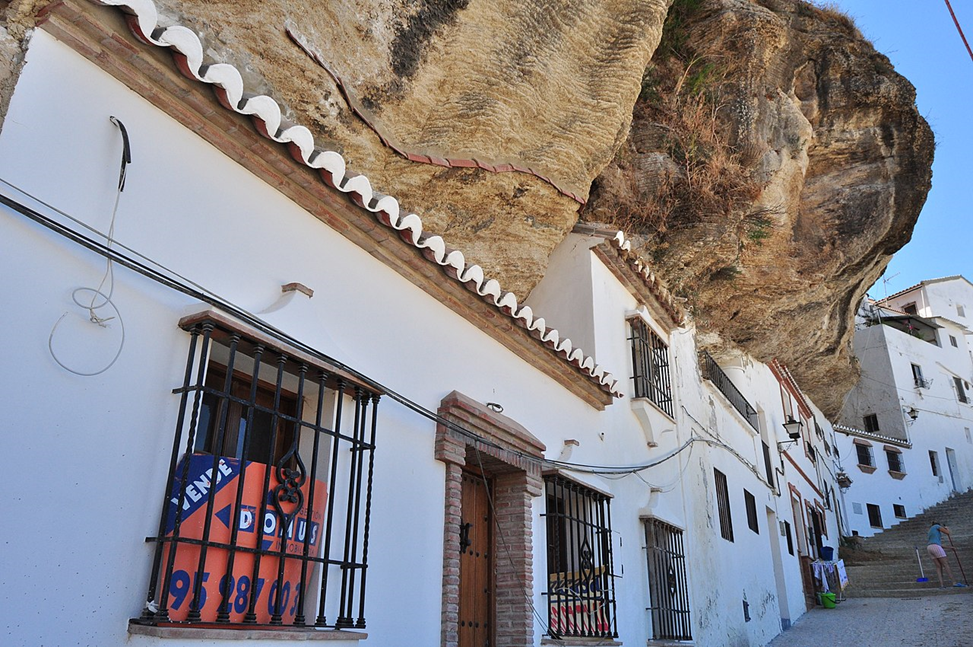
A building in Setenil de las Bodegas – right under a rock.5
Isn’t this… dangerous?
That’s the first thought everyone has.
You see a giant rock hanging over a café table and your brain says: this seems like a terrible idea.
But the rock isn’t loose. It’s solid limestone, part of a continuous cliff. It hasn’t moved in thousands of years. There’s no history of catastrophic collapses in modern Setenil.
In some places, reinforcements have been added. Engineers monitor stability. The town wouldn’t exist if this was reckless.
It feels dangerous because your instincts expect “roof” to mean “something humans built.”
Here, the roof is geology.
And geology is very good at not moving.
What’s daily life like under a mountain?
Surprisingly normal. People go to work. Kids go to school. Bars open at night.
Tourists wander around taking photos of ceilings instead of menus.
Many locals don’t even think about the rock anymore. It’s just… there. Like sky, or pavement.
Some homes barely use air conditioning. Noise is dampened naturally. Rooms stay cool even during heat waves.
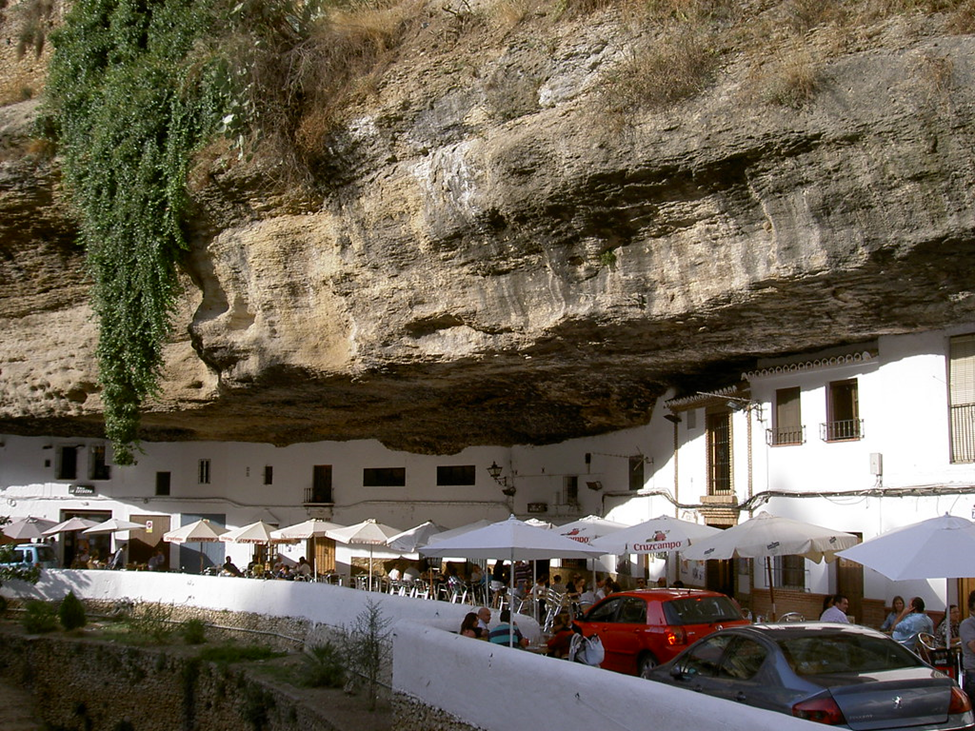
And yes, you can sit at a restaurant table while a cliff hangs over your head. You stop noticing after about five minutes.6
Why does this place feel so unreal?
Because it violates a basic rule of how towns are “supposed” to look.
We expect towns to fight against nature:
- Clear the land
- Flatten the rock
- Control the environment
Setenil did the opposite.
It surrendered.
Instead of removing the mountain, it accepted it. Instead of reshaping the landscape, it negotiated with it. The result looks like a town that lost an argument with gravity and decided to make peace.
It feels wrong in the same way a floating city would feel wrong. Or a town built upside down. Your brain can’t decide whether it’s clever or unsafe.
It’s both.
Why have so few people heard of it?
Because it doesn’t fit neatly into travel categories.
It isn’t a beach town.
It isn’t a major historic capital.
It isn’t a resort.
It’s small, rural, and easy to miss if you’re headed to Seville, Granada, or Málaga.
Setenil only started appearing widely online once photos of its streets went viral. One good image is enough to make people question reality.
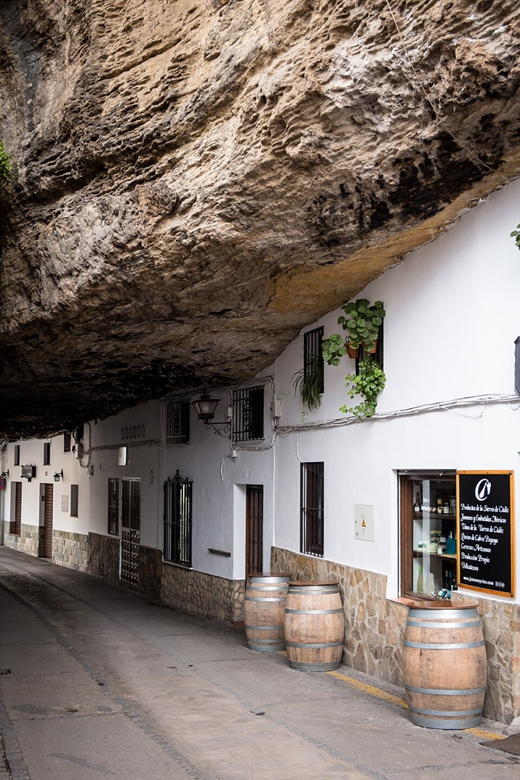
That’s how this place spreads: visually.7
Why this town “shouldn’t exist”
Most towns survive by controlling nature.
Setenil survives by trusting it.
Building under a mountain sounds like something humans shouldn’t do. It sounds temporary. Improvised. Unsafe. Yet this place has worked for centuries.
It challenges the idea that “modern” always means “better.”
It shows that sometimes the best solution isn’t concrete or steel. It’s acceptance.
People didn’t conquer the rock.
They partnered with it.
And now, it just quietly exists. A living town under a ceiling older than civilization itself.
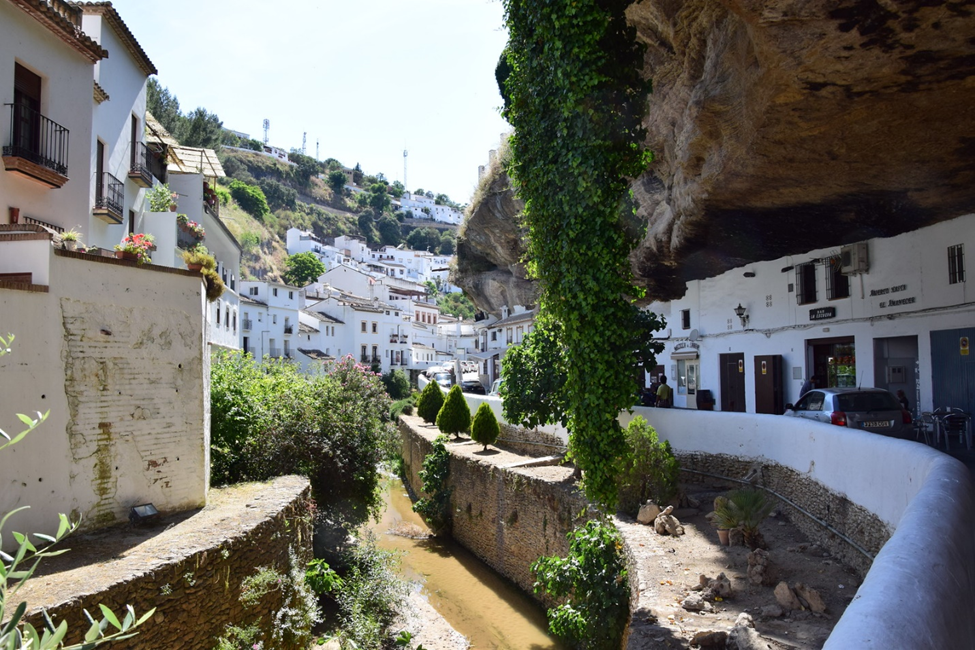
Setenil de las Bodegas will always be one of those most unique curiosities on Earth.8
No spectacle.
No drama.
Just daily life beneath a mountain that decided to become architecture.
Photo credits –
1: Andrei Dimofte, CC-BY-2.0, Flickr
2: Wiki2Fred, CC-BY-SA-4.0, Wikimedia Commons
3: Rafa Esteve, CC-BY-SA-4.0, Wikimedia Commons
4: MRuedaC, CC-BY-SA-4.0, Wikimedia Commons
5: Luis Rogelio HM, CC-BY-SA-2.0, Flickr
6: manuelfloresv, CC-BY-2.0, Flickr
7: Rafa Esteve, CC-BY-SA-4.0, Wikimedia Commons
8: Juanje Orío, CC-BY-SA 2.0, Flickr