How Do People Live in the one of the Coldest Places on Earth?
Some places are cold.
Some places are really cold.
The coldest official temperature recorded at Oymyakon’s weather station is −67.7°C (−89.9°F). Locals also celebrate an unofficial reading of −71.2°C (−96.2°F) from 1924. I think we can agree that’s really cold.
It’s widely considered the coldest permanently inhabited place on Earth. Not a research station. Not a temporary outpost. A real town. With homes. Schools. Shops. Families. A daily routine.
People don’t just survive here. They build their entire lives here.
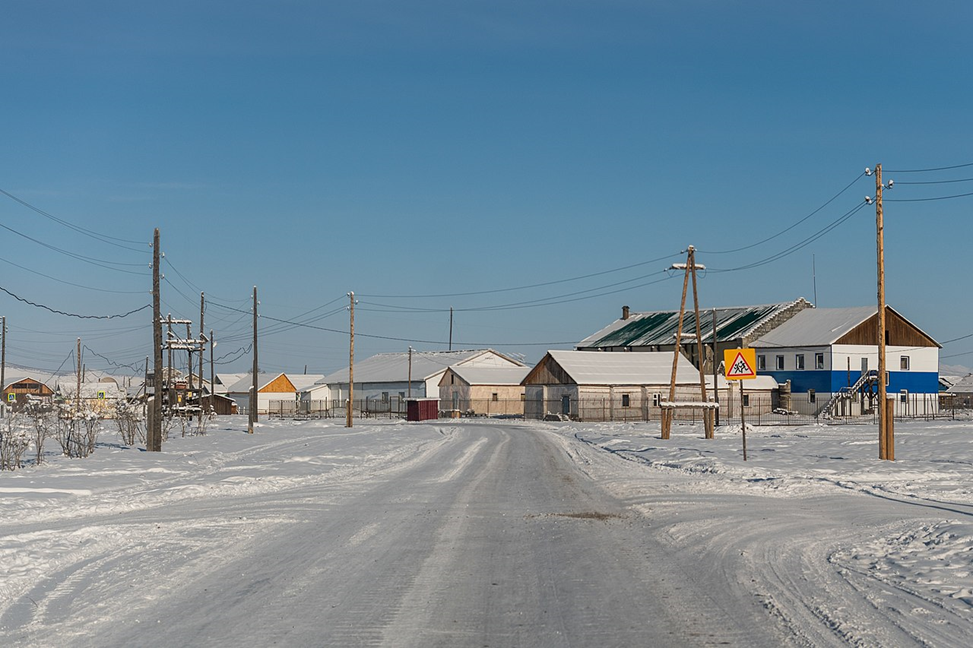
Welcome to Oymyakon, Russia.1
How is it possible for humans to live in a place this cold?
Why would anyone settle here in the first place?
How have they not frozen to death?
And perhaps most surprisingly of all…
would you believe that the summers here can actually be warm?
Where in the world is Oymyakon?
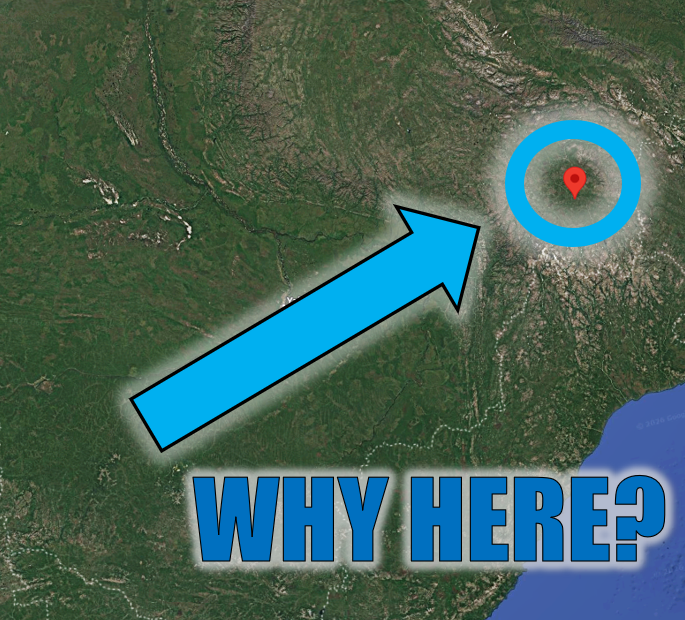
Oymyakon is located in the Russian Federation – specifically, in the Sakha Republic in Eastern Siberia. It’s over 1,000 km from Yakutsk—and thousands of kilometers from Moscow. It has a population of a few hundred (about ~500 by recent estimates).
Pretty isolated, right? Not the easiest place to get to. But, people make it work.
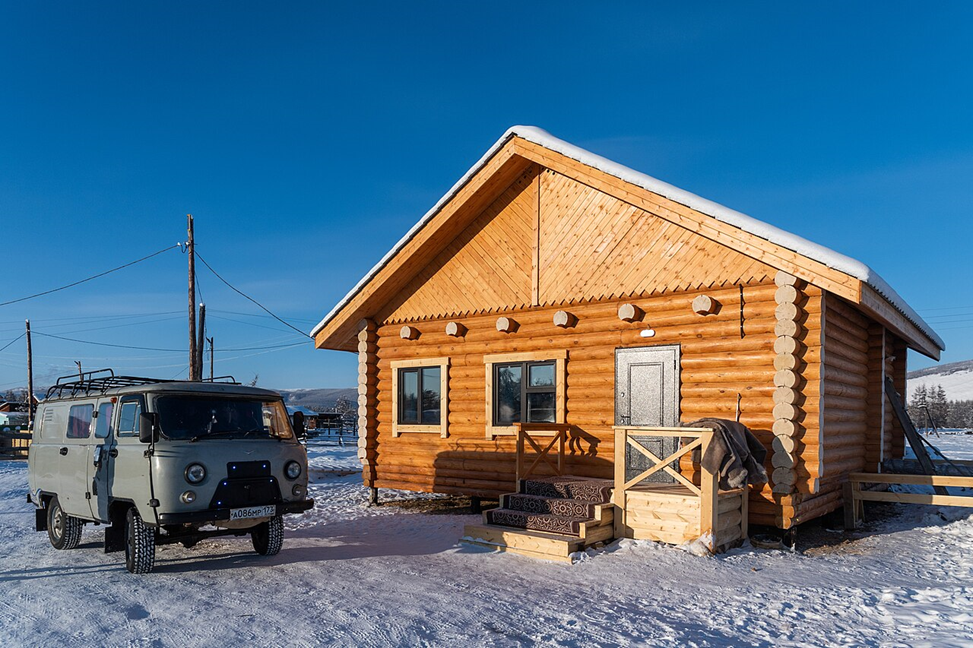
A cozy wooden house in Oymyakon.2
So, why is it one of the coldest places on Earth?
I mean, it’s not in the middle of Antarctica? It’s not surrounded by glaciers? What makes one of the coldest places on Earth so… cold?
The answer lies in geography and location.
You see, Oymyakon sits in a valley, which allows cold air to sink and become trapped. Cold air is heavier than warm air, so once it settles into the valley, it has a hard time escaping.
On top of that, Oymyakon has a continental climate. It is so far inland that no warming influence from the ocean can reach it.
Winter days get short (no polar night—but daylight can feel brutally limited). Combined with clear skies, this causes intense radiative cooling, allowing heat to escape rapidly into the atmosphere.
In other words, Oymyakon isn’t just cold because it’s north. It’s cold because it’s perfectly designed by geography to trap cold.
What does daily life look like in Oymyakon?
When it gets cold there (and we mean really cold), cars are often left running all day – sometimes days at a time, because they literally might not be able to start otherwise.
And underground plumbing? Often not. Outhouses are common.
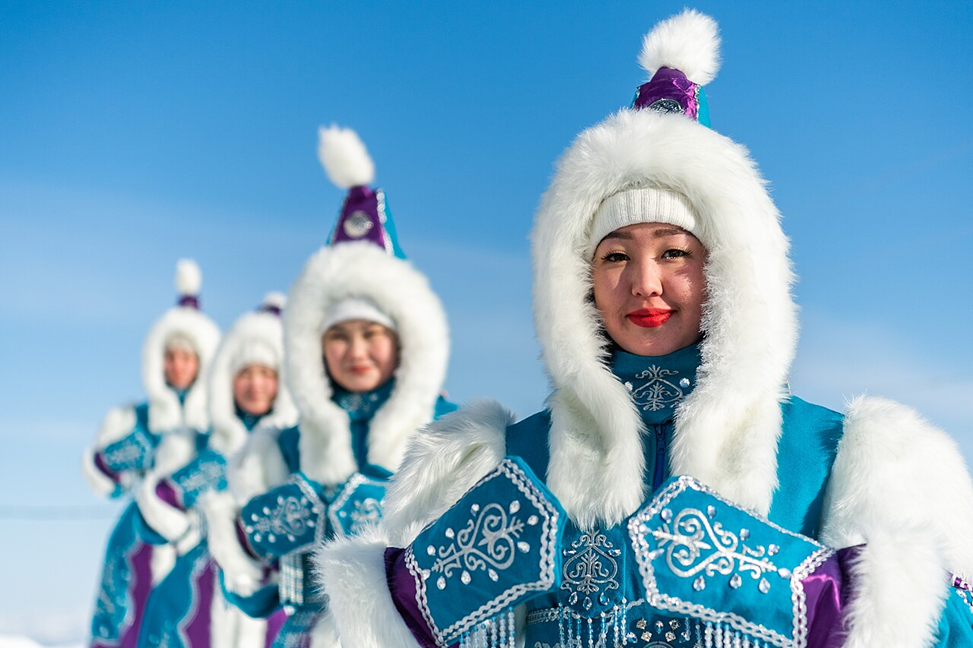
People from Oymyakon – they really dress for the weather.3
Because it can get so cold, the locals wear unique fur clothing to accommodate the frigid temperatures.
When it’s so cold outdoors, you could just put food outside to store. It’ll freeze very quickly. And have a warm beer for some reason? Instant chiller out there in Oymyakon. Never worry about warm beer again.
Watch your eyelashes too – when it gets really cold, you can see ice and snow get stuck to them! Moist skin can freeze to metal in seconds—don’t touch it bare-handed.
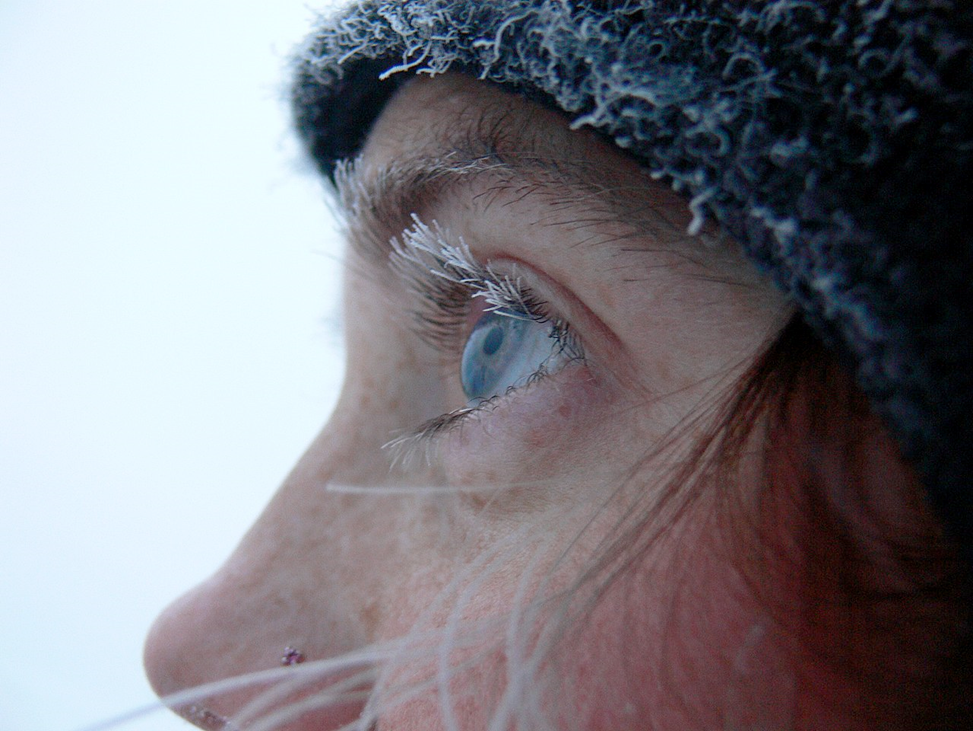
Frozen eyelashes – it’s really cold!4
How do people even survive there?
We’ve established it’s COLD in Oymyakon. And people still live there! How do they make it work?
They’ll often wear multiple layers of clothing, especially lined with fur. We’re not talking about slapping on a pair of long johns under your pants, we’re talking about a multi-layer ordeal.
What you eat can help make it more survivable, too. A diet high in protein and fat helps the body maintain energy and body heat in extreme cold.
Across permafrost regions of Sakha Republic, many larger buildings are built on piles/stilts so heat doesn’t destabilize the frozen ground.
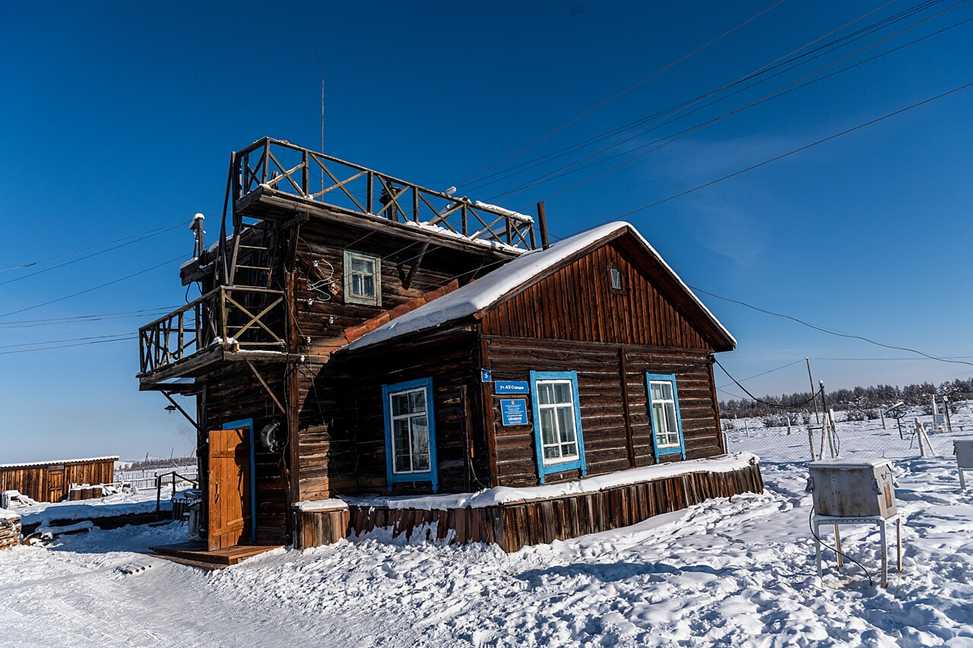
A wooden house in Oymyakon.5
So, why do people even live there at all?
Humans are known to be able to adapt to extreme environments, so it shouldn’t come as a surprise that people live here. But still, why live in one of the coldest places on Earth?
For many people here, it’s their ancestral land. Leaving it would be hard. They grew up here. Their ancestors are from here. Plus, they built a community here, where almost everybody knows each other. Leaving isn’t easy.
Some people did move here through Soviet-era resettlement policies, and just never left.
Others moved here for mining and work.
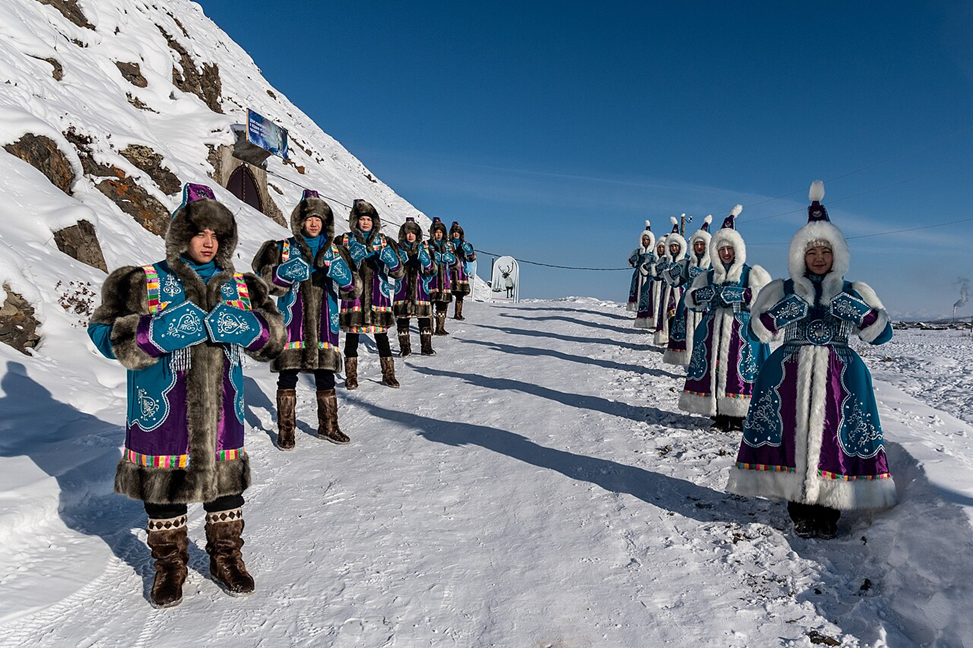
Local men and women in Oymyakon, in traditional outfits.6
But wait… what about summer?
The same place that drops to –89°F (−67.7°C) in winter can feel almost comfortable in summer. Summers are short but surprisingly mild—and sometimes even hot. Average July temps hover around ~59°F (15°C), but daytime spikes above 86°F (30°C) can happen. So, if you wanted to go somewhere for a summer vacation where it’s not sweltering hot, Oymyakon might be a good option.
The surface layer can thaw in summer, so people can do small gardens/greenhouses, but large-scale farming is limited by permafrost and the short growing season. Also… watch out for the mosquitos during the summer, because they will thrive!
Why Oymyakon “shouldn’t exist”
The reality is that it’s very cold in the winter – it’s the coldest permanently inhabited settlement on Earth. Human bodies aren’t built for such extremely cold temperatures. And infrastructure is tough to build in the area because of these extreme temperatures. Survival depends on constant vigilance too – when it gets so cold out, you have to be alert. Stay outside too long, and you might be seriously injured.
But, Oymyakon is proof that humans will build homes almost anywhere, even where nature is clearly trying to say “no.”
Image credits:
1 – Ilya Varlamov, CC-BY-SA-4.0, Wikimedia Commons
2 – Ilya Varlamov, CC-BY-SA-4.0, Wikimedia Commons
3 – Ilya Varlamov, CC-BY-SA-4.0, Wikimedia Commons
4 – Jodie Wilson, CC-BY-2.0, Wikimedia Commons
5 – Ilya Varlamov, CC-BY-SA-4.0, Wikimedia Commons
6- Ilya Varlamov, CC-BY-SA-4.0, Wikimedia Commons