If you look closely at the map of Africa, you’ll notice something strange. There are pieces of Europe sitting on the African coastline. Not colonies. Not overseas territories. Actual Spanish cities in Africa.1
The Spanish Empire was once one of the wealthiest and most expansive empires in human history. Over time, it collapsed, losing nearly all of its overseas possessions. Its empire faded. Its colonies vanished.
And yet, Spain never fully left Africa.
Today, it still controls two small but fully Spanish cities on the northern coast of the continent. They’re so small most people never notice them. But once you see them, you can’t unsee them. (And yes—Spain also holds a few tiny rocky outcrops and islets along the same coast. Ceuta and Melilla are just the big, obvious ones.)
So why are there pieces of Europe sitting inside Africa?
Why do these territories still belong to Spain?
And how did this bizarre situation survive the collapse of one of history’s greatest empires?
Welcome to Ceuta and Melilla
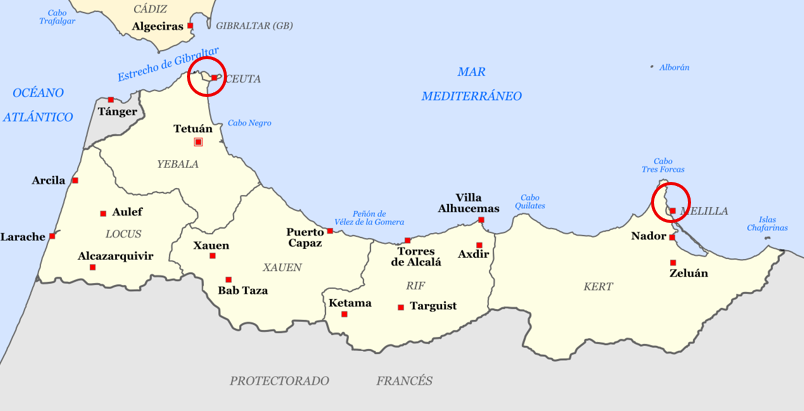
Ceuta and Melilla, circled, in Northern Africa.2
Ceuta and Melilla are two Spanish autonomous cities on the northern coast of Africa—Spanish exclaves separated from mainland Europe by the sea and by Morocco. No, they’re not colonies. They’re not overseas territories. They’re not relics of some forgotten treaty. They are legally a part of Spain itself.
They aren’t treaty ports either, like Hong Kong under Britain or Macau under Portugal. Not leased. They aren’t temporary. And aren’t “special cases.”
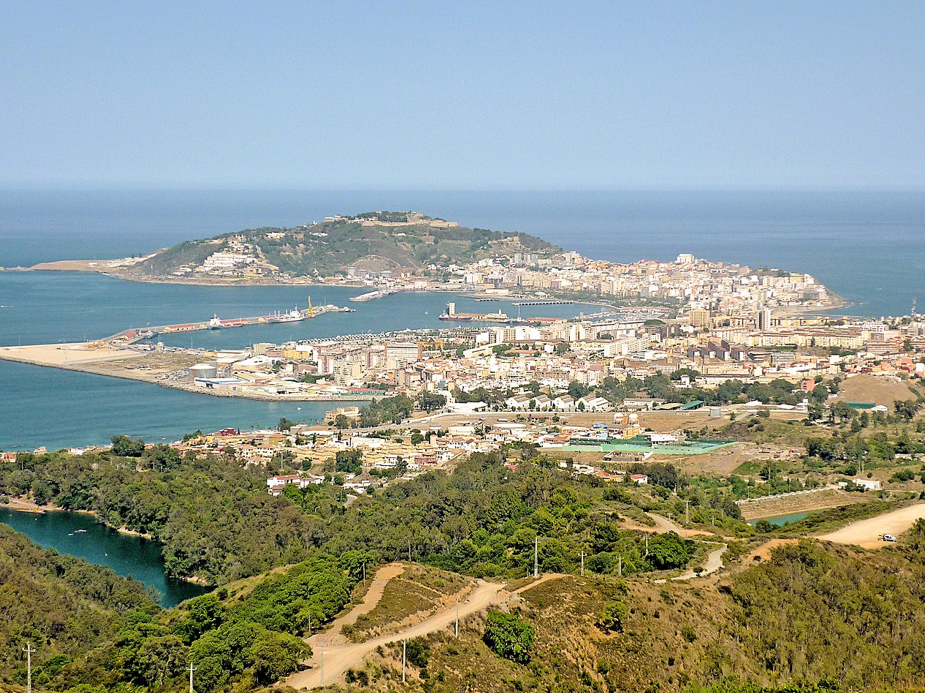
A view of Ceuta’s cityscape.3
They’re Spanish territory and part of the EU—but with important exceptions. Ceuta and Melilla sit outside parts of the EU’s normal tax/customs framework, and travel onward to mainland Spain can involve extra document checks. In other words: politically Spain, practically… a borderland. They are Europe’s last physical foothold on the African continent.
They’re Older Than Spain’s Empire
Most people assume Ceuta and Melilla are leftovers from Spain’s colonial era. They aren’t. They’re much older than Spain’s American empire.
Melilla was taken by Spain in 1497. Ceuta was captured by Portugal in 1415, and only became Spanish in 1668.
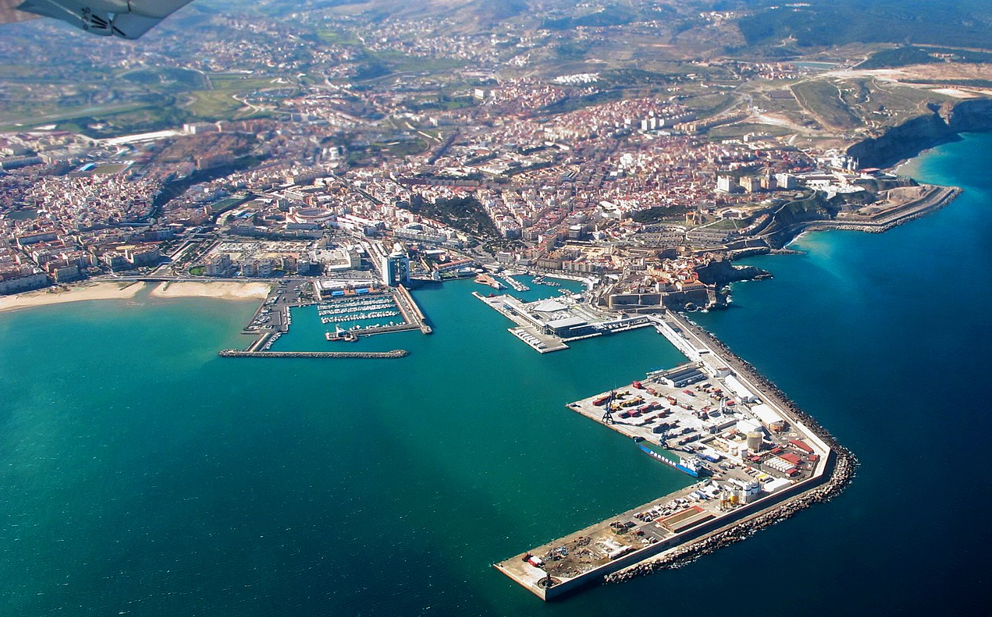
A view of Melilla’s shore.4
Ceuta was European-ruled long before 1492. Melilla came a few years later—early enough to feel medieval, even though Spain had already reached the Americas. They weren’t “colonies.” They were fortified military cities built to control Mediterranean trade routes and suppress piracy.
This alone shocks people and reframes the entire story.
Why the Spanish Cities in Africa Were Never Given Up
Most European powers abandoned their African possessions after World War II.
So why didn’t Spain?
Because Spain doesn’t legally view them as colonies, and as such, they’re treated like mainland Spanish cities. Giving them up would mean surrendering sovereign Spanish territory.
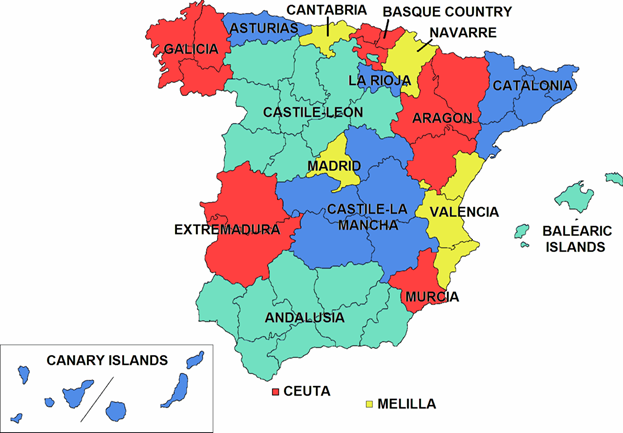
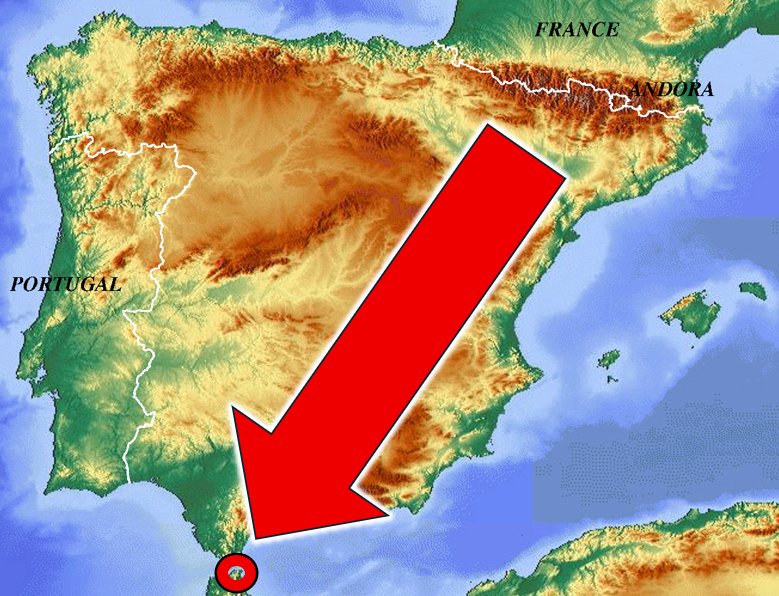
A map of Spain, with Ceuta and Melilla labeled at the bottom.5
To Spain, giving up Ceuta and Melilla wouldn’t be decolonization, but it would feel more like giving up Seville or Barcelona.
Morocco Disagrees
Morocco considers both cities to be occupied territory. To them, these are the last remnants of European presence on African soil.
This creates a quiet but permanent diplomatic tension. Spain says: “They are Spanish cities.” But, Morocco says: “They are colonial remnants.” No compromise exists, because both claims are existential.
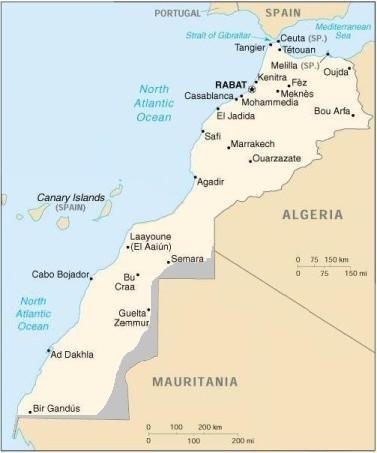
A map including areas Morocco administers in Western Sahara, a UN-listed non-self-governing territory whose status remains disputed.6
The EU’s Southernmost Border
Ceuta and Melilla are not just Spanish borders. They are European Union borders.
They’re surrounded by massive border fences, surveillance systems, and security forces.
Why? Because stepping into Ceuta or Melilla means stepping into the EU.
For migrants crossing Africa, these cities represent the shortest path into Europe, and the final wall between Africa and the EU.
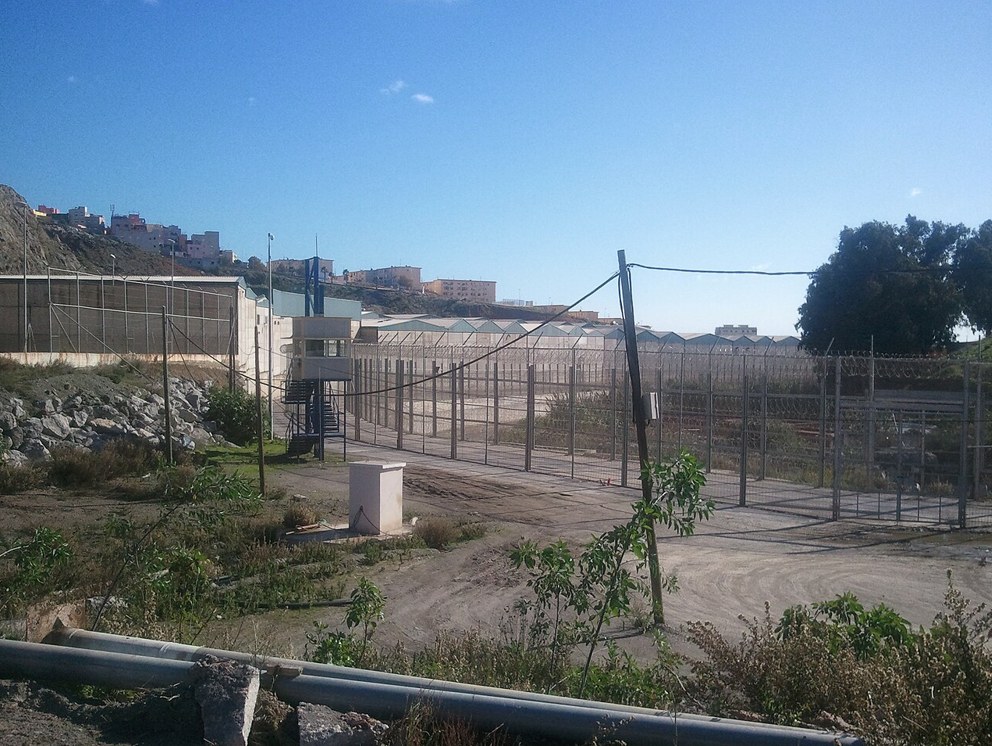
A section of Ceuta’s massive border fence.7
Why Ceuta and Melilla Still Exist in 2026
Ceuta and Melilla exist because they predate modern colonialism. Spain never legally treated them as colonies. To Spain, surrendering them would mean surrendering Spanish territory. And no international agreement has ever forced Spain to leave.
They are living fossils of medieval geopolitics sitting inside a 21st-century world that no longer knows what to do with them.
Image credits:
1 – https://physicalmap.org, CC-BY-SA-4.0, added circle and arrow
2 – Haylli, CC-BY-SA-2.5, Wikimedia Commons
3 – Mario Sánchez Bueno, CC-BY-SA-2.0, Wikimedia Commons, increased contrast
4- JJ Merelo, CC-BY-SA-2.0, Flickr
5- Rajzin, CC-BY-SA-3.0, Wikimedia Commons
6-Io Herodotus, CC-BY-SA-3.0, Wikimedia Commons
7 Xemenendura, CC-BY-SA-3.0, Wikimedia Commons